

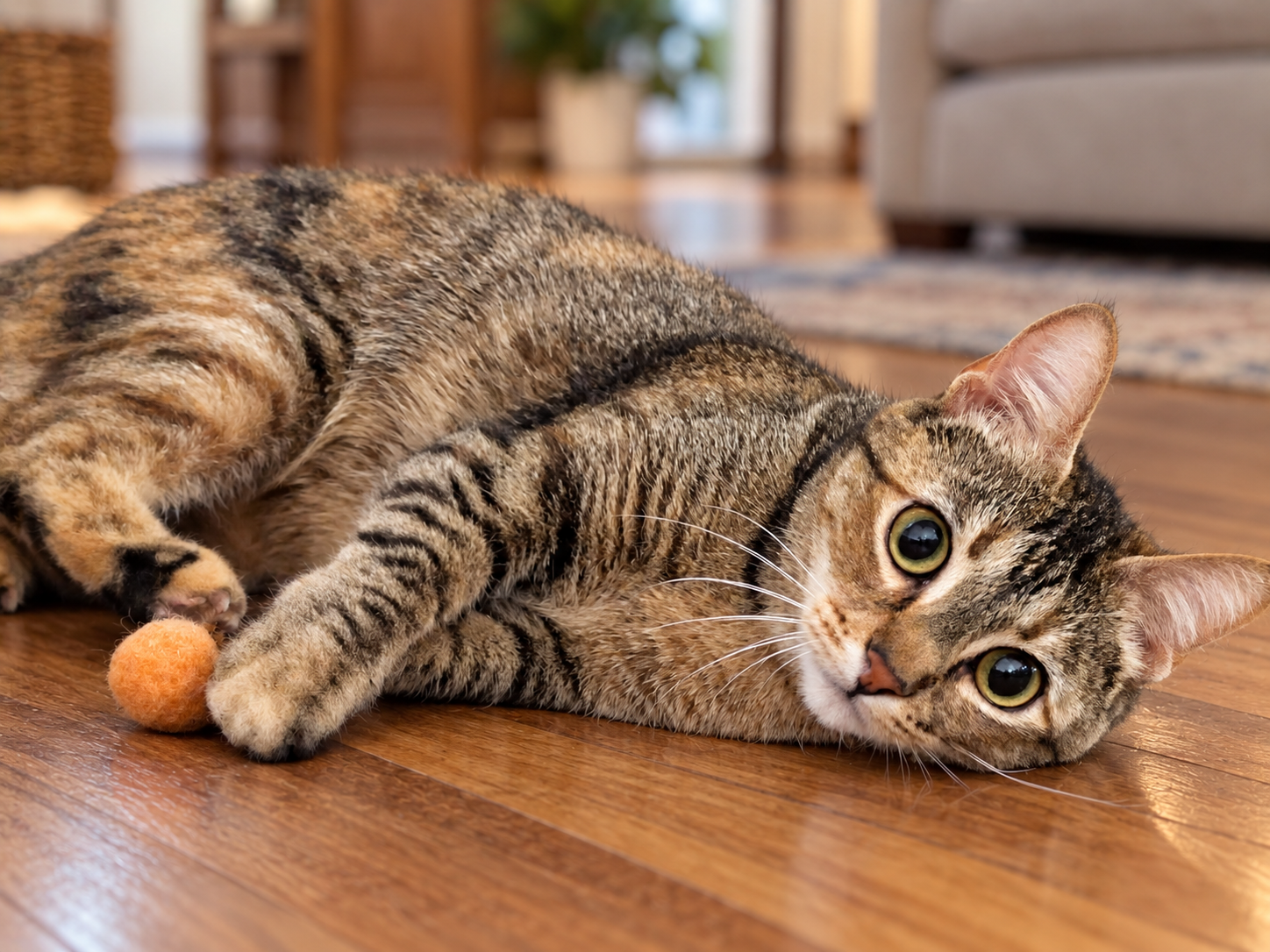
Giving a voice to every cat
Giving Cats a Voice Through Education, Advocacy & Compassion
What we champion
From insightful writing to community outreach, explore our dedicated sections focused on improving feline welfare and inspiring cat lovers everywhere.

Local rescue stories
Heartwarming journeys of rescued cats finding their forever families right here in our community.

Cat advocacy blog
Engaging articles on feline advocacy, adoption awareness, and humane community support.

Care resources
Practical guides, health advice, and everyday tips to keep your companion thriving and happy.

Common questions
Answers to frequent questions about submission guidelines, volunteering, and cat welfare.

About Catvocacy Press
Catvocacy Press is an independent writing and advocacy initiative based in Columbia, Texas. We believe that storytelling can spark meaningful change for shelter cats, community strays, and loving pet parents alike. By sharing authentic rescue journeys and reliable care advice, we strive to build a more compassionate world for cats.
An open letter to Brazoria County municipalities
An Open Letter to Brazoria County Municipalities
It Is Time to Make Room for TNR
To the Mayors, City Councils, Animal Control Departments, and Municipal Leaders of Brazoria County:
We have a growing animal-welfare crisis in our communities.
There are simply more homeless and community cats than there are available homes, foster homes, rescue placements, and shelter capacity.
Shelters are overwhelmed. Rescues are overwhelmed. Volunteers and colony caretakers are overwhelmed. And many residents who want to help simply do not have the financial resources or housing situation necessary to take another cat into their home.
This is not a problem that adoption alone can solve.
It is time to expand the conversation.
TNR should be part of the solution.
Trap-Neuter-Return is a humane population-management strategy that can help prevent the continuous reproduction of unowned and community cats while allowing shelters and rescues to concentrate limited resources on animals who can realistically be placed into homes.
Texas law recognizes Trap-Neuter-Return programs as a nonlethal population-control practice involving trapping, veterinary evaluation, vaccination when needed, sterilization, identification such as ear-tipping, and return to the location where the animal was trapped.
The question for our municipalities should therefore not simply be:
“Should TNR exist?”
The question should be:
“How can we create a responsible local framework that allows TNR to work?”
Manvel Has Given Us an Example
We do not have to start from scratch.
The City of Manvel has incorporated a specific Trap, Neuter, Return (TNR) provision into its animal-control ordinance.
Manvel's ordinance recognizes that participation in TNR, as allowed by state law, is available to residents, organizations, and people who are caretakers or custodians of feral or community cats or colonies.
That is an important concept.
It recognizes something municipalities throughout our county are already seeing:
Ordinary residents are often the people who discover, feed, monitor, and care for community cats.
Instead of leaving those residents with nowhere to turn, a city can establish a pathway for them to become part of the solution.
Compassion Should Not Become a Dead End
Consider the resident who discovers a hungry stray cat.
They put food outside.
The cat returns.
Then another cat appears.
Then kittens appear.
The resident wants to help, but cannot afford hundreds or thousands of dollars in veterinary expenses. The local shelter is full. Rescues have waiting lists. There are no foster homes available.
What should that person do?
Stop feeding the cats and allow them to go hungry?
Take them to a shelter that may already be at capacity?
Assume legal and financial responsibility for every cat simply because they provided food?
Or should the community provide a fourth option:
“We can help you TNR these cats.”
That is the opportunity.
A person feeding a community cat is not necessarily trying to become that animal's owner.
Often, they are simply responding to an animal in need.
Rather than discouraging compassion, we should organize it.
A Local TNR Ordinance Could Provide a Framework
Municipalities could consider adopting provisions modeled on the principles already demonstrated by Manvel, while tailoring them to their own community needs.
A responsible municipal TNR framework could include:
🐾 Participation by residents, organizations and community-cat caretakers
🐾 Humane trapping procedures
🐾 Veterinary evaluation
🐾 Spay/neuter
🐾 Rabies vaccination and other appropriate veterinary care
🐾 Ear-tipping or another recognized method of identifying sterilized community cats
🐾 Return to the original territory when appropriate
🐾 Colony-management guidelines
🐾 Sanitation and nuisance standards
🐾 Education and training for colony caretakers
🐾 Cooperation between animal control, shelters, veterinarians, rescues and TNR organizations
🐾 A clear distinction between community-cat caretaking and ownership, when appropriate under local law
This does not mean that every cat should remain outdoors.
Friendly cats, kittens, injured animals, sick animals, and cats who are appropriate for adoption should continue to be evaluated for rescue, foster care and permanent homes.
TNR does not replace rescue.
It complements it.
We Cannot Rescue Our Way Out of an Endless Supply of Kittens
This is perhaps the most important part of the conversation.
If we rescue 100 cats this year but 500 more kittens are born, we have not solved the underlying population problem.
If we adopt 500 cats but another 1,000 unsterilized cats continue reproducing, shelters and rescues will remain overwhelmed.
We need to address both sides:
Help the cats who are already here.
Prevent the cycle from continuing.
TNR gives us a way to do both.
We Are Asking Municipalities to Open the Conversation
We are not asking cities to abandon animal-control laws.
We are not asking municipalities to ignore public-health concerns.
We are not asking residents to create unmanaged colonies.
We are asking our local governments to consider whether existing policies are helping residents manage community cats—or unintentionally making it harder for residents to help.
We are asking municipalities to:
1. Review their current animal-control ordinances.
2. Identify provisions that may unintentionally discourage responsible TNR.
3. Study Manvel's TNR ordinance as a local example.
4. Meet with shelters, rescues, veterinarians, TNR organizations and colony caretakers.
5. Develop practical community-cat guidelines.
6. Explore funding and partnerships for low-cost or subsidized sterilization and vaccination.
7. Create a clear pathway for residents to request TNR assistance rather than simply being told not to feed community cats.
This Is a County-Wide Problem
Cats do not understand municipal boundaries.
A colony located a few blocks outside one city does not remain there because a city line exists.
People move.
Cats move.
Animals are abandoned.
Kittens are born.
And the problem crosses jurisdictional boundaries.
That is why a coordinated approach among Brazoria County municipalities could be so valuable.
Imagine a system in which a resident who discovers a colony knows exactly where to call.
Imagine shelters and rescues having access to TNR partners instead of receiving every healthy unsocialized community cat as a shelter intake.
Imagine sterilization being available before a colony grows from five cats to twenty-five.
Imagine residents being given education and assistance instead of simply being told that feeding the cats makes them responsible for them.
That is a system we can build.
A Call for Collaboration
Brazoria County does not need another argument between people who love animals and people who are responsible for enforcing municipal ordinances.
We need those people sitting at the same table.
Animal control needs resources.
Shelters need capacity.
Rescues need support.
Veterinarians need partners.
Colony caretakers need assistance.
Municipalities need workable policies.
And most importantly:
The cats need a chance.
There may never be enough homes for every outdoor cat.
But we can reduce the number of kittens entering the system.
We can sterilize existing colonies.
We can vaccinate animals.
We can identify and monitor community cats.
We can reserve shelter and rescue resources for animals who truly need placement.
And we can give compassionate residents a constructive way to help.
Manvel has demonstrated that a municipality can specifically recognize TNR within its animal-control framework.
Perhaps it is time for the rest of Brazoria County to look at what is working locally and ask:
“Could something like this work here?”
The homeless cat crisis is not going to solve itself.
Let's stop waiting for shelters and rescues to have unlimited space.
Let's stop expecting individual residents to carry the entire burden.
Let's stop treating compassion as the problem.
And let's start building a system that makes compassion part of the solution.
It is time for Brazoria County municipalities to have the TNR conversation.
Respectfully,
Pamela Urban
Catvocacy Press
Community Cat Advocacy & Education
🐾 Trap. Neuter. Vaccinate. Return. Monitor. Rescue when appropriate. Adopt when possible. Prevent whenever possible.
Community notes
This is very much needed. Our house is behind an apartment complex & you wouldn't believe how many cats just get left, all the time.
I don't have it in me to not take care of a hurt or hungry animal no one else is caring for- & we've got several strays spayed out of our own money- but there is a never-ending number of new cats turning up & it just is not sustainable or realistic to expect individuals to be able to manage this situation without other resources.
I've called looking for help on this situation & there really is none. The shelters & rescues have been full so I understand why they can't take them in obviously but to my knowledge there aren't really any resources beyond that.
It is not the cats fault! I can't stand seeing ppl be cruel to them. They did not ask or choose to be here, it's not their fault they exist in our space.
I really hope the county takes this recommendation seriously. It's the ONLY humane way to properly address the problem.- Ms. H
Stories that change lives
Disclaimer- This website may use some AI content

"Reading the rescue journeys on Catvocacy Press gave me the confidence and inspiration to adopt my first senior rescue cat."
Sarah Jenkins
"The feline care resources are wonderfully written, accessible, and grounded in genuine care for community cats."
Marcus Vance
"Submitting our local foster story was seamless, and seeing it featured brought our foster kittens the adoption attention they needed."
Elena Morales
Share your cat rescue journey
Has a cat changed your life? We welcome personal adoption stories, foster updates, and advocacy essays from pet lovers everywhere. Send us your experience to be featured on our site.
Contact us and submit your story
Get in touch
Catvocacy Press
Columbia, Texas, United States
Have a question or want to submit your cat's story? Email your narrative and photos directly to pamela.urban777@gmail.com or send a message through our form.